In equipment frame production, fastener mismatch is not a small accessory issue. A bolt that cannot slide smoothly, a nut that does not sit correctly, or a connector that cannot lock firmly can stop the whole assembly line. For machinery builders, automation equipment factories, display system manufacturers, and industrial frame suppliers, this problem often appears when the aluminum profile and fastening parts are purchased without a clear matching standard.
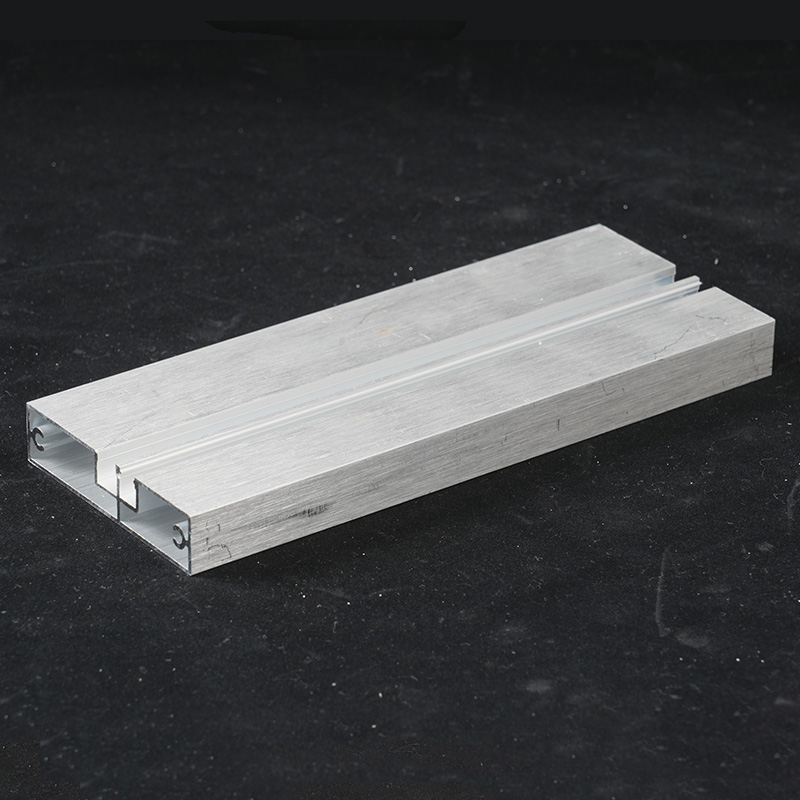
An aluminum t channel extrusion should be selected around the full assembly system, not only the profile shape. Slot width, wall thickness, straightness, surface finish, cutting accuracy, and connector compatibility all decide whether workers can assemble frames quickly and repeat the same result in bulk production.
Equipment frames often use sliding nuts, bolts, angle brackets, joining plates, and positioning blocks. If the T channel is too tight, the fastener may jam during assembly. If it is too loose, the connection may feel unstable after tightening.
For manufacturers, this affects real workshop efficiency. Workers should not need to file, force, or replace fasteners during frame assembly. The profile slot should already match the chosen hardware system before bulk material is cut.
A sample profile may assemble well, but repeated production needs stable tolerance. If the slot size changes between batches, the same fastener may behave differently. That can create uneven locking force, loose joints, and longer inspection time.
Before placing a larger order, buyers should confirm slot width, wall thickness, straightness, and acceptable tolerance range with the supplier.
Machine guards, workstations, test benches, conveyor frames, and enclosure structures often use repeated connection points. If each joint needs manual correction, the frame becomes slower to build and harder to scale.
Our aluminium channel profiles are precision-Extruded Aluminum Profiles with continuous channel structures. They are suitable for guiding, mounting, enclosing, and connecting components in industrial and modular systems.
Some factories try to adapt standard profiles by drilling, milling, or cutting additional slots. This may work for small trials, but it increases labor cost in repeated production.
Custom dimension support helps buyers prepare a profile closer to the real equipment frame design. Instead of changing every part during assembly, the profile can be discussed around the connector, panel, rail, or mounting requirement from the beginning.
A common mistake is buying aluminum profiles first and searching for fasteners later. When the connector does not match, the factory may need new nuts, new bolts, or modified brackets.
For an aluminum t channel extrusion order, buyers should prepare the fastener list before production: bolt size, nut type, bracket thickness, sliding part, panel fixing method, and load direction. The profile should be checked against these parts before bulk cutting.
Not every frame joint carries the same force. Some joints hold panels. Some support moving parts. Some carry machine vibration. Some only guide cables or covers.
If the profile wall thickness and connector design do not match the load direction, the frame may loosen during use. Equipment manufacturers should review the frame’s real function before deciding the profile section.
A T channel may need to guide sliding nuts or adjustable fittings. If the surface is rough or uneven, workers may feel resistance during assembly. In adjustable equipment frames, this can make positioning slower.
The profiles can support anodized, powder coated, brushed, or customized finish options. Buyers should choose the finish according to both appearance and assembly use, especially when the channel remains visible or needs smooth sliding movement.
Many equipment frames are not hidden. They appear on production lines, display systems, inspection benches, retail fixtures, and machine covers. Color difference, scratches, or uneven finish can affect the final product appearance.
For export and project orders, finish consistency should be confirmed together with slot size and hardware matching.
Even when the slot is correct, poor cutting can ruin the assembly. If the cut end is not square, frame corners may show gaps or require force to align. This can affect both structure and appearance.
Factories ordering pre-cut profiles should confirm length tolerance, cutting angle, burr control, and packing marks. If profiles are supplied in stock length for later cutting, distributors should check straightness and surface protection before storage.
Equipment manufacturers often reorder the same profile for repeated frame production. Keeping a clear record of profile size, slot requirement, finish, connector type, and cutting length helps prevent mismatch in later batches.
This is especially useful for distributors serving custom cutting orders. A repeat customer should not need to re-explain the same assembly requirement every time.
A good T channel profile helps reduce fastener mismatch because the slot, connector, wall thickness, finish, cutting, and tolerance are planned together. The goal is not only to buy aluminum material. The goal is to make frame assembly faster, cleaner, and more repeatable.
If your business needs aluminum t channel extrusion for equipment frames, modular systems, display structures, industrial guides, or custom assembly projects, come to us to prepare the profile plan properly. Send the required slot size, fastener type, frame use, finish direction, cutting length, packing needs, and order quantity. Our team can help match aluminum channel profiles with your assembly hardware, so production teams spend less time correcting mismatched parts.