Aluminum is widely used for solar panel mounting brackets because solar projects need hardware that is strong, lightweight, corrosion-resistant, and easy to install. For rooftop PV systems, ground-mounted arrays, solar carports, and commercial solar projects, the mounting structure must hold panels securely while facing outdoor weather for years.
For buyers sourcing solar mounting accessories, aluminum is often a practical material choice because it helps reduce roof load, supports accurate profile extrusion, and works well with rails, clamps, L Feet, connectors, and fasteners. Our Solar Mounting Aluminum Profiles are designed for photovoltaic systems that need reliable support, flexible installation, and project-based customization.
Solar mounting brackets are installed in large quantities. If every bracket, rail, and clamp is too heavy, it can increase transportation cost, handling difficulty, and roof load. Aluminum helps solve this problem because it provides good strength while keeping the overall structure lighter than many traditional metal options.
For rooftop solar projects, this matters a lot. Installers need to move components across roofs, align panels, and finish the work efficiently. Lighter brackets can help reduce labor pressure and make installation smoother, especially on metal roofs, factory roofs, commercial buildings, and distributed PV projects.
For project buyers, lightweight does not mean weak. The key is choosing the right aluminum profile design, wall thickness, surface treatment, and matching accessories.
Solar mounting brackets work outdoors for a long time. They face rain, humidity, sunlight, temperature changes, and sometimes coastal air or industrial pollution. If the bracket corrodes too quickly, the whole PV system may face safety and maintenance problems.
Aluminum has natural corrosion resistance, and surface treatments can further improve outdoor durability. This makes aluminum suitable for many solar mounting parts, including rails, L Feet, mid clamps, end clamps, and profile connectors.
For EPC contractors, solar installers, and distributors, corrosion resistance is not just a technical detail. It affects project reputation, after-sales cost, and long-term customer confidence.
Solar brackets are not all the same. Different roofs, panel sizes, rail systems, and installation methods may need different profile shapes. Aluminum extrusion makes it easier to create functional cross-sections, slots, channels, and mounting points.
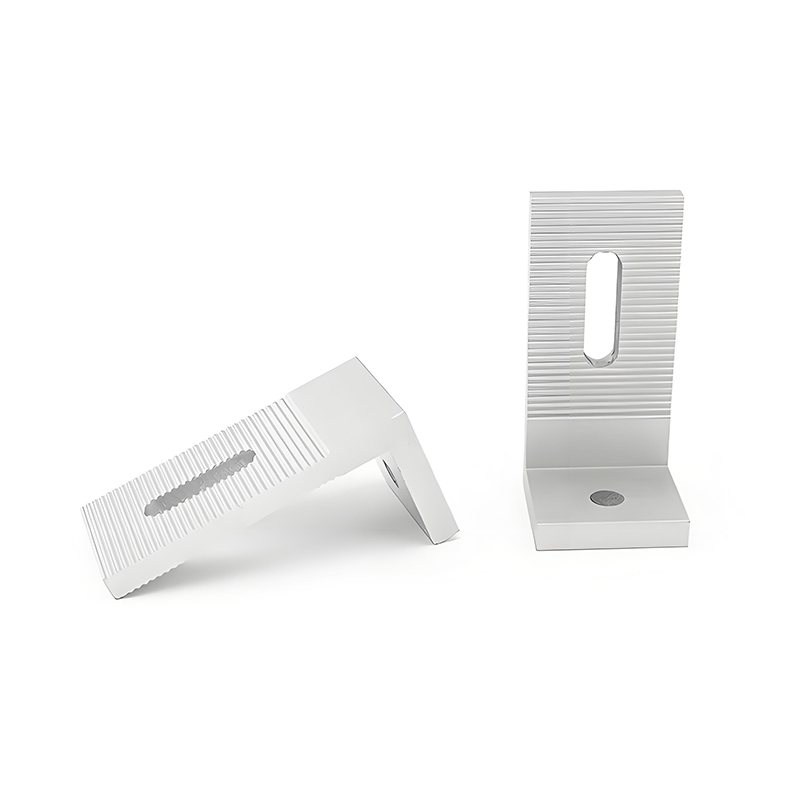
This is one major reason aluminum is common in solar mounting systems. It allows brackets and rails to be designed with precise shapes, helping installers connect components more easily. For example, an L foot with a slotted hole can allow adjustment during installation, while rail profiles can be designed to match clamps and fasteners.
For OEM and ODM buyers, this is especially valuable. Custom profile design can help match local roof types, panel frames, installation habits, and project standards.
A solar bracket does not work alone. It must match rails, clamps, bolts, nuts, rubber pads, connectors, and roof fixing parts. If one part does not fit well, installation may become slower, or the system may not hold panels as intended.
Good aluminum mounting accessories should offer stable connection and clean compatibility. For example, L feet help connect rails to the mounting surface. Mid clamps hold panels between modules. End clamps secure the edge panels. Rails provide the main structural base for panel alignment.
For commercial solar projects, system matching is more important than buying a single low-cost part. Reliable fit can reduce installation mistakes, improve work speed, and help the project pass inspection more smoothly.
For B2B buyers, aluminum solar brackets should be reviewed from both product quality and project use. A bracket that looks correct in photos may still create problems if the dimensions, slot design, surface finish, or packaging are not suitable.
Before placing a bulk order, buyers should check:
Roof type and installation method
Panel frame size and rail compatibility
Aluminum profile design and strength
Surface treatment for outdoor conditions
Slot position and adjustment range
Matching clamps, bolts, and fasteners
Packaging protection during shipping
Custom length, color, and finish needs
Supplier ability for repeat production
These details are important for solar installers, EPC companies, PV system integrators, wholesalers, and local distributors.
OEM solar products often need more than standard brackets. Some buyers need special lengths. Some need customized profile sections. Some need specific surface finishes, packaging, labels, or accessory kits for local markets.
As an aluminum profile supplier, we can support custom solar mounting profiles based on drawings, samples, or project needs. Production support can include extrusion, cutting, drilling, CNC machining, surface finishing, assembly, and packaging. This helps buyers reduce communication gaps and make the final components easier to use in real PV projects.
For distributors and long-term project buyers, stable repeat supply is also important. Consistent dimensions, surface quality, hole positions, and packaging can help reduce installation complaints and warehouse issues.
Aluminum is used for solar panel mounting brackets because it offers a strong balance of light weight, corrosion resistance, profile flexibility, installation efficiency, and outdoor durability. For buyers sourcing solar mounting accessories, aluminum brackets, rails, clamps, and L feet can support reliable PV installation across rooftop, ground-mounted, and commercial solar projects.
Share your roof type, panel size, profile drawing, required finish, order quantity, and packaging needs with us. Our team can help review a suitable aluminum mounting solution and provide practical support before your next solar project order.