LED rope lights can technically be installed inside many vehicles, but installing them inside a school bus requires more than connecting the lights to the electrical system.
School buses are regulated vehicles. Interior modifications may be controlled by national vehicle standards, state or local school-bus specifications, transportation authorities, fleet operators, and inspection requirements.
Before adding any decorative or supplementary LED lighting, the installer should obtain approval from the responsible school-bus operator and confirm the applicable local rules.
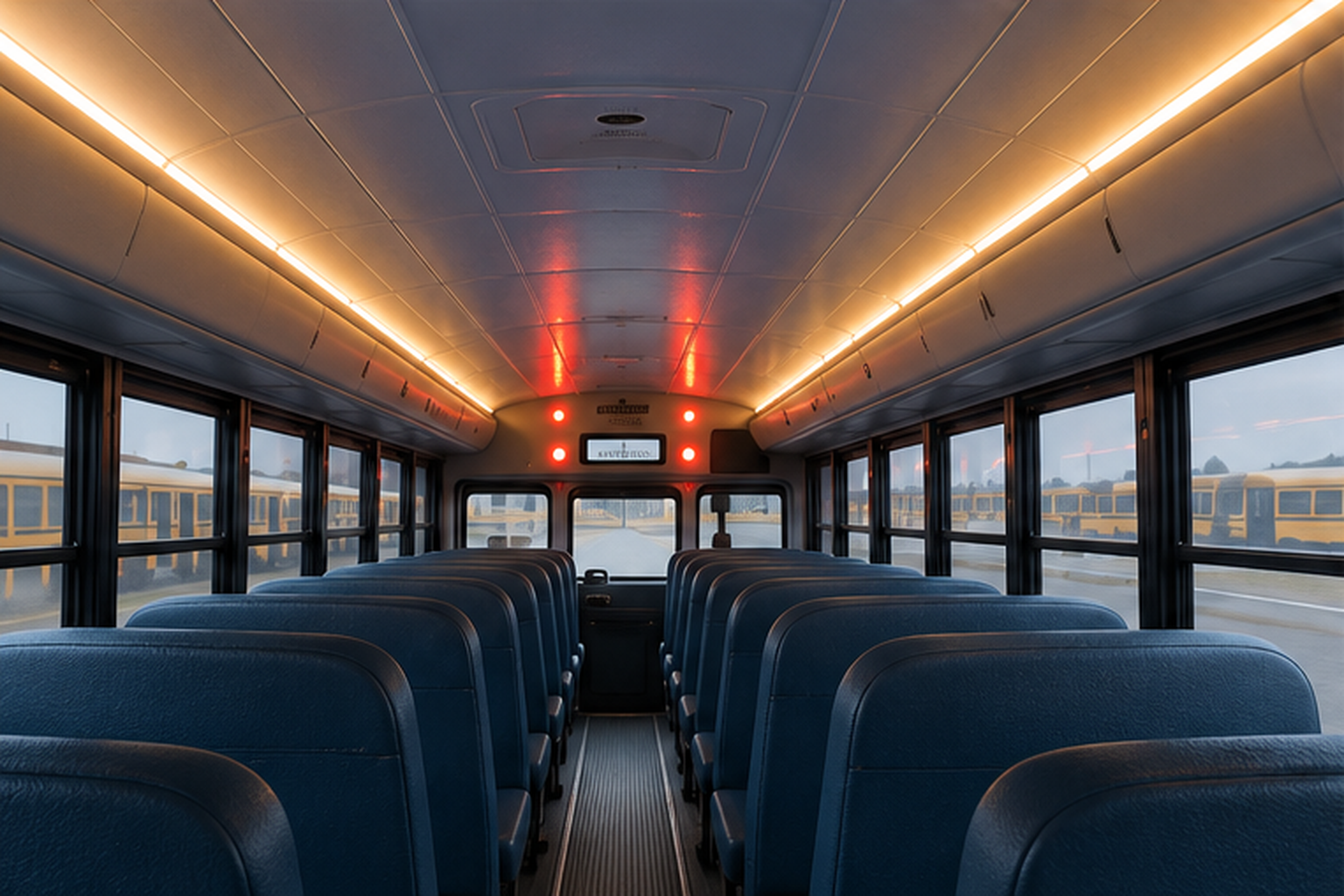
School buses generally use interior dome lights, aisle illumination, step-well lighting, driver-area lighting, and other functional lamps.
For example, Indiana’s school-bus inspection manual requires interior dome lights that adequately illuminate the aisle and step-well and treats inoperative or damaged units as inspection issues.
These functional lamps are different from decorative LED rope lights. A bus may require adequate interior illumination while still restricting unapproved decorative modifications.
In the United States, FMVSS No. 108 regulates required motor-vehicle lamps, reflective devices, and associated lighting equipment. School-bus warning and signal lamps receive particular attention under this standard.
However, the acceptability of additional interior lighting can also depend on state specifications and how the lighting affects vehicle operation.
Rules may differ between states, school districts, and transport contractors. Some authorities may permit approved supplementary interior lighting, while others may prohibit modifications that are not part of the original vehicle specification.
The bus should not be modified based only on a general online guide.
Even when an LED product operates correctly, the installation may still fail inspection if it creates exposed wiring, loose components, sharp edges, excessive glare, or interference with required equipment.
A qualified vehicle electrician or approved bus body service provider should complete or review the installation.
Loose decorative lighting can create problems in a vehicle that experiences vibration, frequent cleaning, temperature changes, and continuous passenger movement.
Bright, flashing, or color-changing lights may reflect on the windshield and windows. This can distract the driver or reduce visibility during nighttime operation.
Any supplementary lighting should remain outside the driver’s critical field of view and should not produce strong reflections.
An adhesive-backed rope light may loosen over time because of vibration, heat, dust, or repeated cleaning.
Wiring should not hang near seats, aisles, emergency exits, roof hatches, doors, or passenger handholds.
Lighting equipment must not block exit labels, emergency windows, door mechanisms, or access routes.
The bus interior should remain free of unnecessary projections and exposed edges that could create passenger hazards.
The lighting voltage, current, fuse protection, switching method, cable size, and connection point must suit the vehicle’s electrical system.
The LED lighting should not be connected directly to an unknown circuit or added in a way that affects required lamps and safety equipment.
Supplementary LED lighting may be considered for specific functional purposes after approval.
Soft, low-level lighting may help make the aisle edge easier to identify during dark conditions.
The light should be uniform, controlled, and positioned so that it does not shine directly into passengers’ or the driver’s eyes.
Additional lighting around steps may improve visibility during boarding and exiting, but it must be designed for vehicle use and coordinated with existing step-well lights.
Activity buses, training vehicles, exhibition buses, or parked education vehicles may have different lighting requirements from buses transporting children on public roads.
The operating status and vehicle classification should be confirmed before modifications are planned.
When supplementary strip lighting is permitted, a rigid aluminum profile can provide a more controlled installation than attaching a loose flexible rope directly to the bus surface.
A profile can be mechanically fixed to an approved surface using suitable mounting hardware.
This reduces the risk of the lighting strip peeling away because of vibration or temperature changes.
The channel and diffuser help protect the strip from direct contact, cleaning tools, dust, and accidental impact.
The cover also creates a smoother exterior surface than an exposed strip.
An opal diffuser can soften visible LED points and reduce direct glare. The profile angle can also help direct light toward the aisle, step, or ceiling instead of passengers’ eyes.
The final design still requires approval because a suitable profile does not automatically make a vehicle modification compliant.
Our factory supplies surface-mounted, recessed, corner, and customized LED aluminum profiles for linear-lighting applications.
For transportation-related inquiries, buyers should provide the strip width, operating voltage, installation position, profile length, diffuser requirement, cable routing, mounting method, and relevant project standards.
Customized cutting, end caps, mounting clips, surface finishes, and project packaging can be discussed after the application has been reviewed. We do not recommend selecting a standard building-lighting profile for vehicle use without first evaluating vibration, temperature, fire behavior, fastening, and regulatory requirements.
Confirm who owns and operates the bus, which authority inspects it, whether modifications are permitted, which colors and operating modes are acceptable, how the lights will be switched, and whether the installation affects emergency equipment.
Written approval is more reliable than assuming that a product is acceptable because another vehicle uses similar lighting.
Developing an approved linear-lighting installation for a bus, special-purpose vehicle, or transport interior? Send us the installation drawing, strip dimensions, mounting position, required profile length, diffuser preference, and applicable technical requirements. We will evaluate the LED Light Aluminum Profile options and prepare a quotation for further project review.
Previous: Are All Led Lights Dimmable?