For lighting distributors, LED aluminum profiles may not look like a large-ticket item at first, but they often bring steady repeat orders. Contractors, cabinet makers, shopfitters, lighting retailers, and interior project suppliers all need reliable profiles when LED strip lights are used in cabinets, ceilings, shelves, walls, display cases, and furniture details.
The profit does not only come from selling aluminum channels. It comes from helping customers choose the right profile faster, matching the diffuser and accessories correctly, reducing installation trouble, and keeping stock easier to manage. When distributors arrange their LED aluminum profile selection with real job-site needs in mind, this category can become a strong repeat-sales item.
Many distributors make the mistake of stocking too many similar LED profiles without a clear selling direction. This can make the warehouse harder to manage and make customers unsure which profile to choose. A better approach is to start with the installation scenes that appear most often in the market.
Surface mounted profiles are usually the first choice for simple indoor lighting and quick renovation work. Recessed profiles are used when the finished lighting effect needs to be cleaner and more integrated. Corner profiles are useful for shelves, wardrobes, cabinets, and display areas. Larger profiles can be added when customers need stronger heat dissipation or a wider light surface.
This way, the distributor is not simply adding more models. Each profile has a clear reason to exist, which makes it easier for the sales team to explain and easier for customers to reorder.
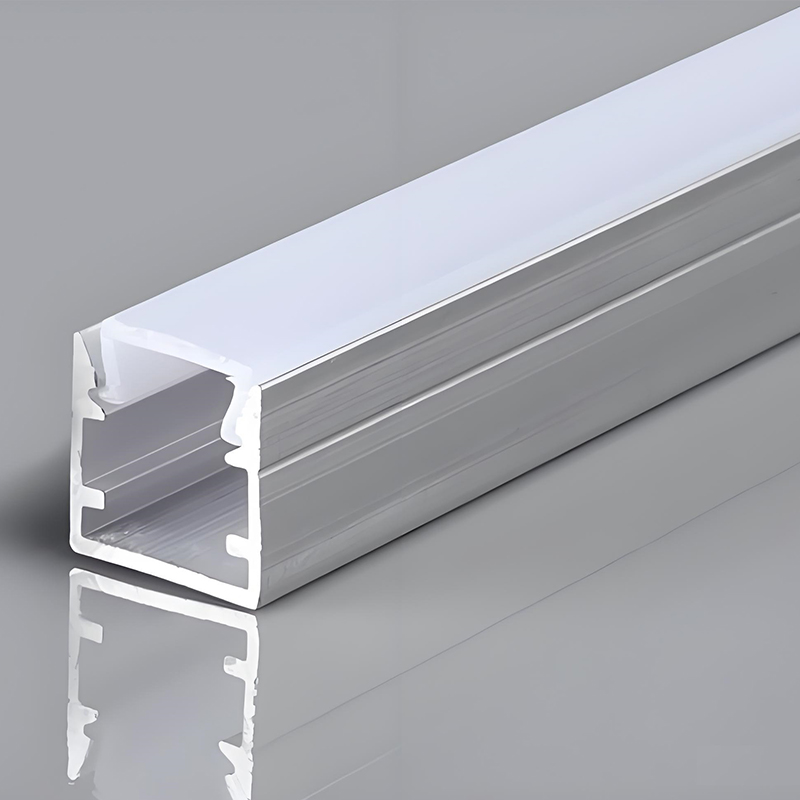
Basic LED channels are often compared by price, but recessed profiles are usually selected for appearance and installation quality. When the profile sits into a cabinet, wall groove, ceiling slot, or display structure, the lighting result looks cleaner. For customers doing higher-value interiors, this detail matters.
That is why led profile recessed options can help distributors reach better projects. Cabinet makers, lighting contractors, retail display builders, and interior fit-out teams may prefer recessed profiles when they want a smoother light line and a more finished look. These customers are less likely to buy only by the lowest price because the profile becomes part of the visible design.
Recessed profiles also create more chances to sell matched parts. Diffusers, end caps, mounting clips, connectors, and cutting service can all become part of the same order. For distributors, the order value becomes stronger because the customer is buying a complete installation set, not only one aluminum piece.
Many buyers do not start by asking for a technical profile code. They ask for something more practical: a profile for kitchen cabinet lighting, a clean channel for wardrobe lighting, or a recessed option for ceiling detail. If distributors only present sizes, customers may still need extra help before they can decide.
A more useful way is to connect each profile with a clear application. For example, slim profiles can be recommended for cabinets and shelves. Recessed profiles can be suggested for built-in furniture and wall details. Wider profiles can fit commercial display areas where smoother light output is needed. Corner profiles can solve lighting needs in tight spaces.
This approach makes the buying process easier. The customer can quickly understand where each profile should be used, and the sales team can recommend suitable accessories at the same time.
In real installations, the aluminum body is only one part of the job. Contractors also need diffuser covers, end caps, clips, screws, connectors, and sometimes custom cutting. If these parts are not ready, the customer may face delays on site or buy the missing items from another supplier.
For distributors, accessories are not small extras. They can improve order value and make the customer more willing to reorder from the same supplier. A profile with a well-matched diffuser and end caps looks more complete, installs more smoothly, and reduces after-sales questions.
This is especially important for LED Profile Recessed orders. Recessed installation usually requires more accurate matching. If the diffuser is loose, the end cap does not fit, or the clip is not suitable, the final lighting detail may look unfinished. When the distributor prepares matched accessories from the beginning, contractors can work faster and trust the supply more.
Standard lengths are useful for daily stock, but many project customers care about cutting waste. If profiles need to be cut heavily on site, contractors spend more time, create more leftover material, and may damage the surface during handling.
For larger lighting jobs, cut-to-length support can become a strong selling point. It helps contractors save installation time and gives distributors a better reason to win project orders. Instead of only competing on unit price, the distributor can offer better material planning and easier site work.
Our LED aluminum profiles can be arranged with different sizes, colors, surface finishes, diffusers, and cutting requirements. This gives distributors more room to prepare standard stock for daily sales while still serving project-based orders with more specific needs.
A profitable LED aluminum profile business does not need to depend on a huge number of models. What matters more is whether each option is easy to understand, easy to match, and easy to reorder.
Before adding a new profile to stock, distributors can ask a few simple questions:
What installation problem does this profile solve?
Which LED strip width does it match?
Are the diffuser, end caps, and clips available?
Can the sales team explain its use clearly?
Will contractors reorder it after the first project?
Can it be packed safely for wholesale shipping?
If the answer is not clear, the profile may only take up stock space without creating stable sales. A smaller but better-organized selection can often bring better turnover than too many similar options.
Contractors usually prefer suppliers who make ordering simple. They do not want to spend too much time checking whether the diffuser fits, whether clips are included, or whether the profile is suitable for the installation surface. If the distributor can provide clear profile matching, accessory suggestions, and packing support, the customer is more likely to return.
For lighting retailers and wholesalers, this also improves daily sales efficiency. Sales staff can recommend a profile by use scene, then add the matching diffuser and accessories in the same order. For project suppliers, clear matching can reduce site delays and wrong-model returns.
In this sense, LED Profile Recessed and surface mounted profiles should not be sold as isolated items. They should be prepared with the right diffuser, end cap, clip, and length plan, so customers can buy with less hesitation.
LED aluminum profiles can help distributors earn more when they are stocked and sold around real installation needs. Surface profiles can cover daily lighting jobs, recessed profiles can serve cleaner interior details, and matched accessories can increase order value while reducing customer confusion.
We are KOGEEAL, and we can help review profile types, diffuser matching, accessory sets, custom lengths, packing methods, and bulk order plans. Send us your target market, main application scenes, and preferred stock direction, and our team can help you build a practical LED aluminum profile supply plan for wholesale and project customers.