In the commercial lighting sector, the "dead lamp" phenomenon is the ultimate nightmare for electrical contractors and project managers. You’ve likely seen it happen: a high-end office or retail project looks stunning at the handover, only to have the linear lighting begin to dim, flicker, or fail entirely within six months. When LED strips are installed directly onto wood, drywall, or inside tight cabinetry without a proper thermal path, they essentially "bake" themselves from the inside out. This excessive heat buildup causes rapid lumen depreciation and premature diode failure, leading to a cascade of warranty claims and a severely frustrated client. To safeguard a project's reputation, professional installers are increasingly turning to
LEDs are often marketed as "cool" light sources, but while they don't radiate heat in the same way as incandescent bulbs, the junction temperature of the LED chip itself can be intense. Without a physical medium to pull that heat away, the semiconductor material degrades. An aluminum channel serves as a dedicated heat sink, providing a high-conductivity surface that draws thermal energy away from the flexible PCB and dissipates it into the surrounding air. This process is crucial for maintaining the "L70" rating—the point at which an LED maintains 70% of its initial brightness—of your light strips.
Choosing a professional-grade housing like our
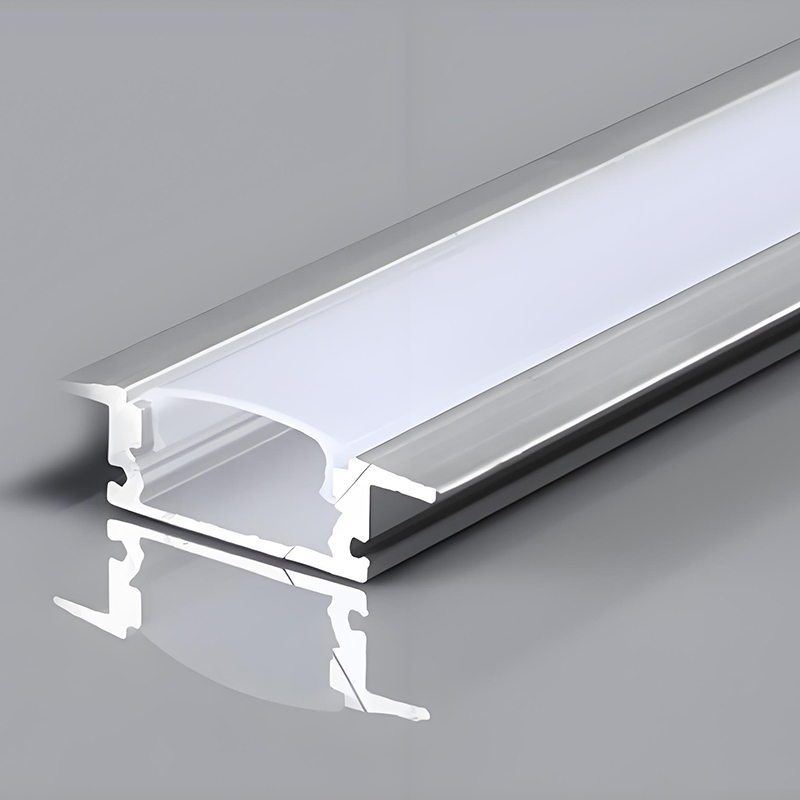
Beyond heat management, the integration of lighting into modern architecture demands a level of finish that standard surface-mounted tracks cannot provide. Architects and interior designers are increasingly specifying flush-mount systems to achieve that elusive "line of light" effect. This is where the functional design of
By utilizing our products, OEM and ODM partners can offer their clients a solution that balances superior optics with high-performance cooling. The opal diffusers used in these channels are specifically calibrated to maximize light transmission while eliminating the visible "dots" or pixelation from the LED strip. For a project buyer, this means delivering a premium visual experience that remains stable over the long term, avoiding the patchy or yellowing light output that often occurs when inferior materials are exposed to constant heat.
For the procurement team, the challenge lies in finding a supplier that understands the rigors of a commercial job site. Off-the-shelf, retail-grade channels often lack the wall thickness required for effective heat sinking or the precision-fit end caps needed for a dust-proof seal. As a specialized manufacturer, we focus on the technical details that matter to the professional trade. Our
We provide the flexibility of custom lengths and tailored finishes to meet the exact requirements of large-scale commercial bids. By working directly with a source-level supplier, you can streamline your supply chain and ensure that the hardware arriving on-site is exactly what was specified in the design phase. This proactive approach to component selection is what separates a reliable lighting installation from one that will require expensive retrofitting just a few months down the line.
Thermal failure is the most common and most avoidable issue in modern linear lighting. By prioritizing high-quality aluminum channels, you aren't just improving the look of an installation; you are actively extending the life of the LEDs and protecting your firm from the costs and reputational damage of frequent maintenance visits.
If you are currently managing a project where lighting reliability is a concern, or if you’ve faced complaints about dimming strips in the past, let’s look at your specifications together. Our engineering team can provide detailed data on thermal performance and help you select the right profile for your specific installation environment. Reach out to us for a technical consultation or to request sample kits for your next project—we are here to ensure your lighting stays bright from day one to year ten.