
Aluminum U channels are one of the most widely used extrusion shapes because they are simple, adaptable, and easy to integrate into structural, decorative, and protective applications. They are used in framing, edge protection, panel support, trim systems, equipment housings, shelving, signage, and many other fabrication projects. The question many buyers ask first is straightforward: what are the standard sizes? The practical answer is that aluminum U channels are available in a broad range of standard dimensions, but the “right” size depends on wall thickness, slot width, load condition, installation method, and whether the channel is being used as a visible trim or a functional structural component.
This article explains how aluminum U channel sizes are defined, what counts as a standard size, how different dimensions affect performance, and when a standard section is enough compared with when a custom aluminum U channel makes more sense. You can explore KOGEE aluminum profile categories on our products.
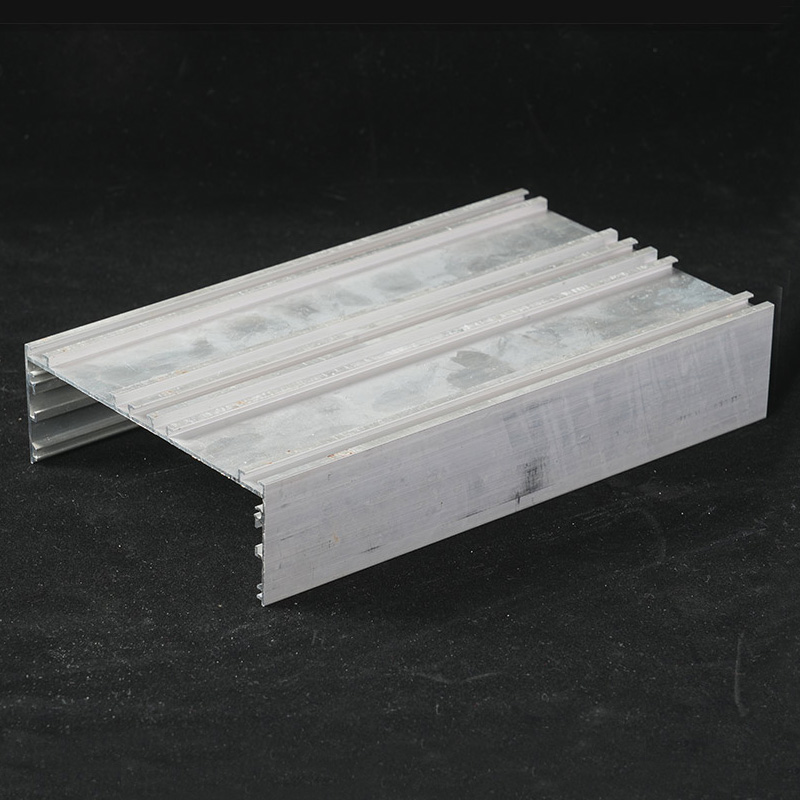
Aluminum U channel dimensions are usually described by three core measurements: the overall width of the opening, the height of the side walls, and the material thickness. In many drawings, these are listed as width by height by thickness. For example, a U channel described as 20 × 20 × 2 mm usually means a 20 mm opening width, 20 mm side wall height, and 2 mm wall thickness.
This is important because two channels may both be called “20 mm U channel” while performing very differently if one has a 1.2 mm wall and the other has a 3 mm wall. Thickness influences rigidity, machining behavior, and overall load capacity. Height influences bending resistance and how well the profile captures or protects the inserted panel or edge.
In real procurement, the size should always be read as a full dimensional set rather than only one nominal number.
There is no single global chart that defines one universal set of aluminum U channel sizes for every market. In practice, standard sizes are the dimensions most commonly produced, stocked, and repeatedly used in construction, industrial fabrication, decorative trim, and equipment manufacturing.
Typical standard U channels often fall into small, medium, and large groups. Small channels may start from around 10 mm to 15 mm in width for light trim and edge details. Medium channels are often used in the 20 mm to 50 mm range for common framing, panel holding, and protective edging. Larger U channels can move well above that range for heavier-duty applications.
The table below shows a practical overview of commonly used size ranges.
| Typical Size Range | Common Use Direction | General Notes |
|---|---|---|
| 10 × 10 mm to 15 × 15 mm | Decorative trim, light edge protection, cover details | Often used where load is low and appearance matters |
| 20 × 20 mm to 30 × 30 mm | General support, light framing, panel guidance | One of the most commonly requested practical ranges |
| 40 × 20 mm to 50 × 50 mm | Medium-duty structural and enclosure applications | Better rigidity and broader industrial usability |
| 60 mm and above | Heavy-duty support, larger framework, special industrial builds | Usually selected based on load and span requirements |
These are reference ranges, not absolute limits. Exact availability depends on extrusion series, market standards, and whether the supplier stocks general sections or focuses on project-based manufacturing.
When people compare U channels, they often focus only on the opening width and side wall height. In practice, thickness can be just as important. A thin-wall aluminum U channel may work perfectly for decorative or protective applications, but it can flex too easily if the channel is used in a frame or support role.
A thicker wall improves stiffness, machining stability, and fastening strength. It also changes total weight and cost. For example, a 30 mm U channel with a 1.5 mm wall behaves very differently from one with a 3 mm wall, even if the outer dimensions look identical.
This is why a durable aluminum U channel is usually selected not only by visible size, but by matching the wall thickness to the actual mechanical demand of the project.
Standard aluminum U channels are popular because they can solve many different problems without requiring complex fabrication. In architecture, they may be used as trim lines, partition channels, glass holding sections, and finishing details. In industrial fabrication, they can support guides, covers, guards, and light structural frames. In signage and display, they often act as edge retainers or panel holders.
For LED systems, similar U-shaped profiles can also function as mounting channels, where the internal width must match strip or diffuser requirements. In furniture and interior systems, the channel may be used to retain boards, panels, or decorative inserts.
The same profile shape appears across many industries, but the correct standard size changes depending on whether the priority is load, appearance, fit, or ease of assembly.
The most practical way to choose a U channel size is to start from what it must hold, guide, protect, or support. If the channel is used for panel retention, the internal opening must be compatible with the panel thickness plus installation tolerance. If the channel is used as a support rail, the designer should start from the load and expected span. If it is used as a decorative trim, visual proportion and finish consistency may be more important than structural capacity.
This is where standard sizing remains useful. It simplifies sourcing and can reduce lead time when the requirement matches a common section. However, when tolerance, fit, or performance becomes highly specific, a custom aluminum U channel often becomes the better engineering decision.
Standard U channels work well in many situations, but not all projects fit a catalog section. Some applications need a tighter slot width, a thicker base, one leg longer than the other, or an integrated fastening feature. In these cases, forcing a standard channel into the design can create more fabrication work later.
A custom extrusion can combine multiple functions into one shape. For example, the channel may need to hold a panel, conceal a fastener, and align with a decorative line in the same section. Instead of assembling several parts, a custom profile can simplify installation and improve consistency.
This is why many engineering teams use standard sizes for simple projects and move to custom profiles for repeat programs, premium architectural details, or more demanding industrial applications.
| Channel Direction | Main Advantage | Typical Limitation |
|---|---|---|
| Smaller standard U channels | Compact, lighter, easier to integrate visually | Lower stiffness and reduced load capacity |
| Medium standard U channels | Balanced for many practical projects | May still need thickness adjustment for heavy use |
| Larger standard U channels | Better structural support and stability | More visible, heavier, and may exceed simple trim needs |
This comparison helps explain why there is no single “best” standard size. The best size is the one that matches the real function.
KOGEE supplies aluminum profile solutions across multiple application categories, including architectural, industrial, lighting, and general-purpose profile directions. If your project needs a standard U channel for general fabrication, or a profile adapted for a more specific fit and finish requirement, it is often helpful to begin by identifying the end use rather than only the nominal size. You can review profile categories and application directions on our products and compare the most suitable path for your project.
Standard sizes for aluminum U channels typically range from small light-duty sections around 10 mm to 15 mm, through highly practical mid-range sizes such as 20 mm to 50 mm, and into larger industrial dimensions above 60 mm. The correct selection depends on opening width, leg height, wall thickness, and the actual application. In many cases, a standard profile is the most efficient solution, but when fit, load, or integration becomes more complex, a custom section may deliver better long-term value.
If you are selecting aluminum U channels for construction, equipment, trim, or industrial fabrication and need help choosing a practical size or evaluating whether a standard section is enough, contact KOGEE. Share your target dimensions, panel or load requirements, and intended use, and our team can help you identify a suitable profile solution.