Aluminum profile 2020 and 4040 are both widely used structural extrusion formats, but they are built for very different load conditions, assembly scales, and project expectations. The numbers refer to the outer profile dimensions in millimeters. A 2020 profile is typically 20 mm by 20 mm, while a 4040 profile is 40 mm by 40 mm. That dimensional difference may look simple, yet it changes stiffness, connection capacity, weight, application range, and total system cost in a meaningful way.
For buyers, designers, and engineers, the real decision is not whether one is universally better than the other. The better choice depends on what the frame must support, how much deflection is acceptable, how much installation space is available, and whether the project values lightness, modularity, or higher structural rigidity. You can explore KOGEE extrusion solutions on our products page.
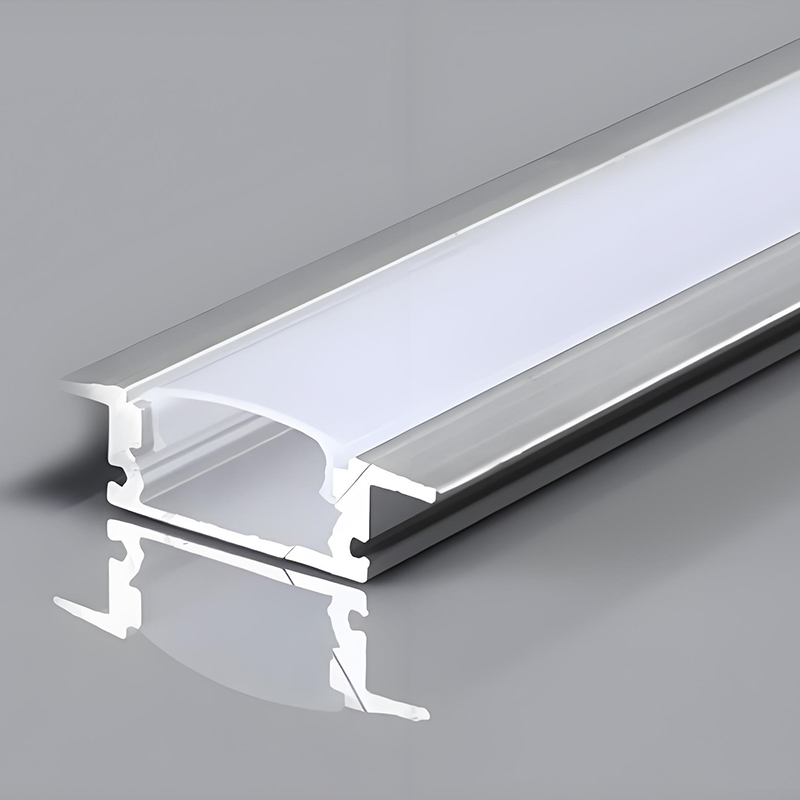
In modular aluminum framing, profile names usually describe the cross-section size. A 2020 profile is a compact section used in smaller frames, light-duty assemblies, and installations where limited space matters. A 4040 profile is a much larger section with greater wall mass and a larger moment of inertia, which means it usually handles load and bending more effectively.
This difference becomes important once the profile is used as part of a real structure. A 2020 frame may work very well for covers, guards, display frames, and compact support structures. A 4040 frame is more often chosen for machine frames, workstations, heavy enclosures, and projects where span length and structural stability matter more than compactness.
The main performance difference between 2020 and 4040 is stiffness. Because the 4040 profile has a much larger cross-section, it resists bending and twisting far better under the same loading condition. This makes it more suitable for frames that must remain stable over wider spans or carry repeated dynamic loads.
By contrast, 2020 is lighter and easier to handle, but its smaller structure means it reaches its practical limit more quickly when span length or load increases. In a short frame with light components, this may not matter at all. In a production workstation or equipment support frame, it can become the deciding factor.
A practical aluminum profile selection should always begin with structural expectations rather than appearance alone.
One advantage of 2020 profile is efficiency in small builds. It uses less material, is easier to cut and transport, and often simplifies assembly in compact products. If the frame only needs to hold light panels, sensors, cable routing, or low-load brackets, 2020 can be a very efficient choice.
4040 takes more installation space and adds more weight, but that added mass supports higher rigidity and stronger connection zones. In modular engineering, that tradeoff is often worthwhile because a frame that stays stable under load usually reduces vibration, alignment drift, and maintenance correction later.
For projects where appearance, handling, and cost efficiency are priorities, 2020 may be enough. For projects where the frame is part of the machine’s functional stability, 4040 is usually the safer direction.
Larger profiles generally provide more robust connection areas. A 4040 section usually allows stronger brackets, more stable joining hardware, and better support for accessories such as heavy panels, doors, rollers, and linear modules. It also tends to provide more flexibility when combining with gussets and corner reinforcements.
A 2020 profile can still support modular accessories very effectively, but the connection capacity is better suited to light and medium-duty structures. If repeated loading, operator contact, or moving components are involved, the larger profile often gives a more reliable foundation.
This is one reason many industrial builds use 2020 for secondary structures and 4040 for the main frame.
The difference becomes clearer when viewed through actual use cases.
| Profile Type | Typical Use Direction | Main Advantage |
|---|---|---|
| 2020 aluminum profile | Light frames, display systems, guards, compact fixtures | Lightweight, space-saving, cost-efficient |
| 4040 aluminum profile | Workstations, machine bases, equipment frames, heavy enclosures | Higher rigidity, stronger support, better span performance |
This is also where a custom aluminum profile solution can be useful. Some projects need the compact efficiency of a smaller frame in one zone and the strength of a larger frame in another. Instead of forcing one size everywhere, the system can be optimized by function.
A 2020 profile usually costs less per length than a 4040 profile because it contains less material. But the lowest material cost does not always create the best total result. If a 2020 frame must be heavily reinforced to achieve acceptable stability, the final system may become more complex and less efficient than a cleaner 4040 solution.
On the other hand, using 4040 everywhere in a light-duty project may increase cost, weight, and installation complexity without adding real value. The better decision comes from matching profile size to the actual structural role of each section.
For procurement teams, the goal is not to buy the biggest profile. The goal is to buy the most practical aluminum profile configuration for the application.
If your project is compact, lightly loaded, and space-sensitive, 2020 is often the better choice. If your frame must support equipment weight, maintain alignment, or resist bending over longer spans, 4040 is usually more suitable. The more demanding the structure becomes, the more important stiffness, joint stability, and long-term rigidity become.
KOGEE supports aluminum profile solutions for modular structures, industrial framing, and application-based customization. If your project requires specific lengths, cross-sections, finishes, or accessory integration, you can review options on our products page and evaluate the most suitable direction for your build.
The difference between aluminum profile 2020 and 4040 is far more than size. A 2020 profile is better for lightweight, compact, and cost-sensitive structures, while a 4040 profile is better for higher-load frames that need stronger rigidity and more stable performance. The best choice depends on load, span, installation space, and the structural role of the profile inside the full system.
If you are comparing aluminum profile options for a frame, enclosure, workstation, or custom structure, contact KOGEE with your application details. Our team can help you assess the