
The best aluminum profile for recessed LED lighting is the one that matches your mounting depth, LED strip width, heat load, and the visual effect you want at the diffuser. Recessed installation is popular because it creates a clean, built-in light line with no exposed hardware, but it also makes profile selection more demanding. If the channel is too shallow, you will see LED dotting. If it is too narrow, the strip will not bond correctly. If the profile cannot manage heat, LED brightness and color consistency can drift faster over time.
This guide explains how to choose the best recessed LED aluminum profile for cabinetry, ceilings, walls, shelving, and architectural lines. It focuses on practical selection logic rather than generic descriptions. You can explore KOGEE options on our LED aluminium profiles collection.
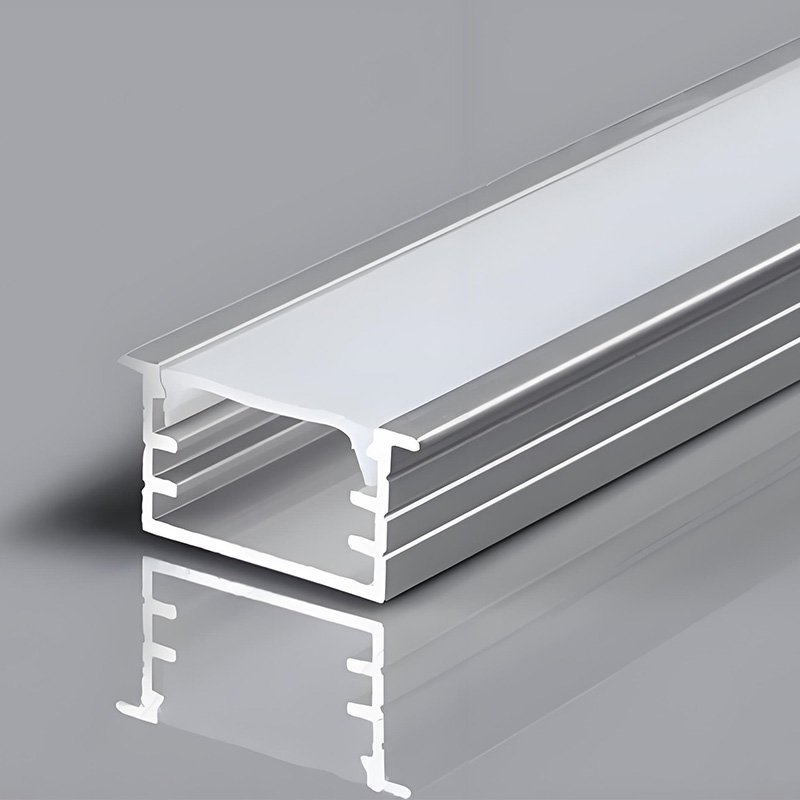
Recessed LED lighting can mean a flush channel in a cabinet panel, a narrow slot in drywall, a continuous ceiling line, or a hidden shelf edge. Each application has different limits on groove depth, available width, and service access. The best profile for a kitchen cabinet may prioritize easy cleaning and glare control, while the best profile for a commercial corridor may prioritize long-run alignment and stable thermal performance.
Before choosing a profile, define three outcomes clearly. The first is the light appearance, whether you need a continuous line with minimal dotting or a brighter line where LED points are acceptable. The second is the installation constraint, including how deep and wide the recess can be cut. The third is maintenance expectation, because recessed channels are harder to service once installed, so the profile should be stable, protective, and easy to assemble correctly the first time.
A recessed profile must physically fit the LED strip with full adhesive contact. If the channel is too tight, the strip edges curl and detach over time. If it is too wide, the strip can sit off-center and create uneven light distribution under the diffuser.
For single-row LED strips, many projects require a channel that provides comfortable clearance on both sides without forcing the tape. For wider strips or dual-row strips, the profile must be sized accordingly, and the diffuser should be selected to manage hotspot visibility. A custom recessed LED profile approach is often used when strip widths vary across product lines or when the lighting design needs higher output without increasing visible dotting.
Depth is one of the most important variables in recessed lighting quality. The distance between the LED chips and the diffuser determines whether individual points blend into a smooth line. Shallow channels can look bright but often show dotting at normal viewing distance. Deeper channels give the light more room to mix, which creates a cleaner line and reduces glare.
Depth is also tied to diffuser type. A high-transmission diffuser preserves brightness, but it may show dots unless depth and LED density are sufficient. A more frosted diffuser hides dots better but reduces brightness slightly. The best recessed profile choice is usually the one that allows you to use a diffuser that meets your appearance goal without forcing you to overdrive strip brightness.
Aluminum profiles are used partly because they help spread heat away from LED strips. Heat management is especially important in recessed installations because the channel sits inside wood, drywall, or composite panels where airflow may be limited. When heat is not controlled, LED strips can run hotter, which can accelerate lumen depreciation and shift color consistency over time.
A thicker aluminum body and a design that creates more contact area with the strip base generally supports better heat spreading. For higher wattage strips, choosing a profile with stronger thermal mass is a practical decision, especially in long-run architectural lines where replacing strips later is costly.
A durable recessed LED aluminum profile is not only about mechanical strength. It is also about maintaining stable LED performance across long service periods.
Recessed profiles come in trimless and flange styles. A flange design covers minor groove imperfections and makes installation more forgiving, especially in wood routing where edges may not be perfectly clean. Trimless designs create a more minimal look but require higher precision in groove cutting and finishing.
If the installation environment is high-visibility, such as retail displays or hotel interiors, flange profiles often provide a cleaner final edge because they hide micro gaps. In modern minimalist residential design, trimless profiles can look more seamless when the groove is cut accurately and surface finishing is controlled.
The diffuser is not an accessory. It is part of the optical system. A recessed profile without the right diffuser can feel harsh, show hotspots, or create uneven brightness. Diffusers are typically clear, semi-frosted, or frosted depending on the effect required.
For under-cabinet recessed lighting where the viewer is close, reducing glare is often a priority, which favors a diffuser that blends points better. For ceiling lines at higher mounting height, you may prioritize efficiency and brightness, which can allow a clearer diffuser if dotting is less visible.
The best approach is to choose a diffuser together with profile depth and LED density. Treating these three variables as one system produces a predictable result.
End caps, mounting clips, and joiners matter more in recessed applications because the channel becomes part of the built environment. End caps reduce dust ingress and protect wiring exits. Joiners keep long runs aligned so the diffuser line remains straight and professional. Clips and fixing methods prevent micro movement that can create vibration noise or visible gaps over time.
In projects where consistent installation speed matters, specifying the same accessory set across multiple profiles can simplify training and reduce field errors. This is where a practical, standardized profile system often outperforms a collection of mixed components.
| Recessed Scenario | Best-Fit Profile Character | Why It Works |
|---|---|---|
| Cabinet grooves and shelving | Shallow-to-medium recessed with flange | Covers routing edges and installs cleanly |
| Architectural ceiling lines | Deeper recessed with stable joiners | Improves dot-free look and long-run alignment |
| Wall washes and feature panels | Medium depth with glare-controlled diffuser | Reduces harshness at close viewing angles |
| Retail displays and showcases | Precision recessed with high clarity diffuser option | Balances clean look and brightness |
| High-output task lighting | Wider body for heat spreading | Supports higher wattage strip stability |
This table is not a substitute for measurement, but it shows how application conditions guide the best profile choice.
KOGEE provides LED Aluminium Profiles designed for recessed installation scenarios with options that support clean finishing, stable mounting, and diffuser matching for different visual goals. For projects that require repeatability across multiple rooms or multiple sites, KOGEE can support specification-driven selection and configuration planning, including profile style alignment, diffuser choice, and accessory standardization. You can explore available options on our LED aluminium profiles collection.
For programs that need a custom recessed LED aluminum profile, such as a specific groove dimension, trim style, or diffuser requirement, KOGEE can support project-oriented guidance so the final installation looks consistent and performs reliably.
The best aluminum profile for recessed LED lighting is the one that fits your strip width, provides enough depth to meet your dot-free appearance goal, manages heat for stable LED output, and matches your trim and diffuser preference for the installation environment. Recessed lighting looks simple after installation, but achieving that clean line depends on selecting the profile as a complete system including channel size, diffuser type, accessories, and long-run alignment strategy.
If you are planning a recessed LED project and want help selecting a practical profile and diffuser combination, contact KOGEE. Share your LED strip width, target run length, groove dimensions, and the appearance goal you want, and we can recommend suitable profile options and provide guidance for a reliable installation.